SPECIAL SESSION #05
Vibroacoustic metrological characterization for archaeology and cultural heritage
ORGANIZED BY
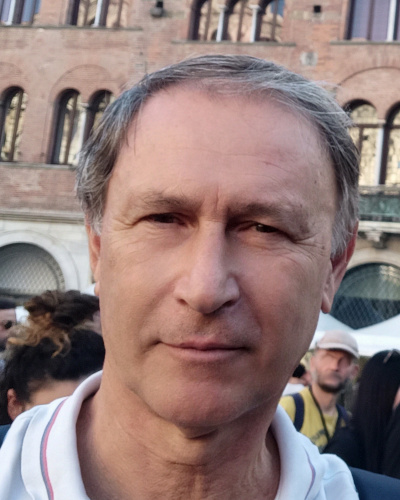 Fabrizio Barone
Fabrizio Barone
University of Salerno, Dept. of Medicine, Surgery and Dentistry "Scuola Medica Salernitana", Italy
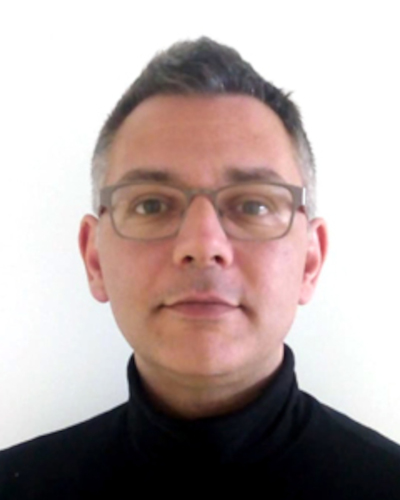 Marco Casazza
Marco Casazza
University of Salerno, Dept. of Medicine, Surgery and Dentistry "Scuola Medica Salernitana", Italy
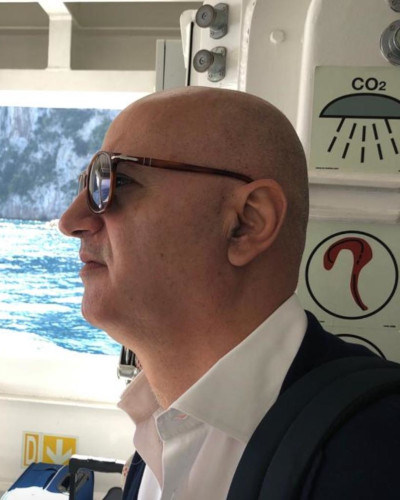 Armando Di Maio
Armando Di Maio
Di Maio Architecture Studio, Naples, Italy
SPECIAL SESSION DESCRIPTION
Cultural heritage research is increasingly adopting integrated approaches, in which the monuments and their surrounding environment are investigated as coupled systems. Archaeology, metrology, architecture, and historical analysis jointly address material properties, structural behavior, environmental interactions, and their implications for conservation and interpretation.
Within this framework, vibroacoustic analysis offers a measurement-based approach for investigating sound and vibration phenomena in monuments, archaeological sites, and landscapes. Vibroacoustic responses arise from the interaction of materials, structural configurations, environmental conditions, and human activity, and can be interpreted as indicators of construction techniques, degradation processes, environmental impact, and usage patterns. Heritage assets may therefore be modelled as dynamic systems supporting both diagnostic assessment and archaeological interpretation.
A key methodological aspect concerns the formulation of measurement-based interpretative hypotheses, linking physical parameters to archaeological and historical knowledge. Such hypotheses should be grounded in contextual understanding and progressively validated through experimental measurements, numerical modelling, and comparison with archaeological and documentary evidence.
Advanced sensing technologies, non-destructive testing methods, three-dimensional documentation, and computational tools support vibroacoustic characterization within a rigorous metrological framework, contributing to structural assessment, monitoring, conservation planning, and heritage interpretation.
This special session provides a forum for the discussion of measurement methods, instrumentation, and experimental and numerical approaches for vibroacoustic characterization in archaeology and cultural heritage. Contributions addressing monuments and sites as integrated monument–environment systems, including methodological developments, validation strategies, and case studies, are encouraged.
TOPICS
Topics include, but are not limited to:
- Innovative sensors for vibroacoustic monitoring of cultural heritage assets;
- Innovative systems for vibroacoustic monitoring cultural heritage assets;
- Data analysis methodologies and techniques for vibroacoustic characterization of heritage assets;
- Indicators of vibroacoustic quality for specific heritage assets: public spaces; religious spaces; theatres and other performing spaces; musical instruments;
- Vibroacoustic landscape characterization for archaeological and other heritage sites;
- Vibroacoustic experimental and theoretical methods for understanding and interpreting archaeological and historical evidence;
- Vibroacoustic modeling in the context of material and immaterial cultural heritage assets;
- Vibroacoustic methods for the assessment of the preservation state or damages of heritage assets;
- Integration of hard and soft metrology in vibroacoustics applied to cultural heritage.
ABOUT THE ORGANIZERS
Fabrizio Barone graduated with honors in Electronic Engineering, PhD in Physics. Full Professor of Applied Physics at the Department of Medicine, Surgery and Dentistry "Scuola Medica Salernitana" of the University of Salerno, founder and scientific coordinator of the Applied Physics Group. Prof. Barone research and development activity is oriented towards the study of theoretical and experimental methods in applied physics. In this context, his multidisciplinary research focuses on the development of advanced sensors, innovative methodologies and adaptive systems for scientific, health and cultural heritage applications, with a scientific production of more than 600 papers in international refereed journals and in proceedings of international conferences.
His research activity in physics, developed over more than 30 years both in the field of basic and applied research, has also seen him propose and participate in large international scientific projects, like the interferometric gravitational wave detector VIRGO, that allowed him obtaining scientific results of undisputed scientific value, such as the first detection of gravitational waves and the first detection of black holes. For these discoveries, prof. Barone received several awards, among which the Special Breakthrough Prize in Fundamental Physics 2016 and the Grüber Prize for Cosmology 2016, together with his colleagues.
Recently, part of the research activity of Prof. Barone has been addressed in the multidisciplinary context of cultural heritage, with the introduction of an innovative approach to the vibro-acoustics field interpreted as synthesis of classic vibration and acoustic fields, that, overcoming their classic division in frequency bands, is leading to the proposition of innovative material and immaterial metrological models in the archaeology field.
Fabrizio Barone is member of the Italian Physical Society (SIF), the Society of Italian Medieval Archaeologists (SAMI), as well as of the International Measurement Confereration (IMEKO) – TC22.
Marco Casazza graduated in physics; Post-graduate diploma in health physics; PhD in Environment, Resources and Sustainable Development. Assistant Professor in Applied Physics at the Department of Medicine, Surgery and Dentistry “Scuola Medica Salernitana”, University of Salerno (Italy). As a visiting scholar, he worked at the Department of Chemical Engineering, Division of Energy Process at KTH (Stockholm, Sweden) (March – May 2015), and, as foreign expert, at the School of Environment, Beijing Normal University (Beijing).
As applied physicist, Marco Casazza research activity is focused on the integration of physical sensors for multi-parametric monitoring in different applied contexts, including environmental physics (especially air quality and hydrogeology) and of tangible and intangible cultural heritage (vibro-acoustics applied to urban and rural landscape; heritage structures and infrastructures; music instruments characterization) and ecology. This experimental area of research is complemented by the development and application of theoretical methods in the domain of physics applied to the environment, medicine and biology. In particular, Marco Casazza research is focused on the representation and quantification of dynamics involving material (i.e.: mass, energy, information) flows.
Marco Casazza was involved in several research projects, funded by European Union, the European Space Agency, the Italian Ministry of University and Research, and the Italian Ministry of Foreign Affairs and International Cooperation. As a result of his research activities, in year 2017 he received the WEGE Prize finalist team award (Grand Rapids, MI, USA), “for the search of innovative solutions to wicked problems in the environmental field”. Marco Casazza covers the position of associate editor for the journals "Frontiers in Environmental Science", Remote Sensing and Environmental Informatics section, and the journal “Frontiers in Sustainable Cities”, Urban Resource Management section. In addition, he is member of the Editorial Board of "Environmental and Sustainability Indicators" (ELSEVIER).
Marco Casazza is member of the Italian Physical Society (SIF) and the Society of Italian Medieval Archaeologists (SAMI).
Armando Di Maio graduated in Architecture from the University of Naples “Federico II”, with a thesis dedicated to architectural restoration and the use of innovative polymer-based technologies for historic centers and monumental buildings, anticipating themes related to materials, diagnostics, and performance in heritage conservation. His international experience includes professional work in Australia, participation in international design competitions (Paris, Dubai, Switzerland), and architectural projects in Albania and the United States.
Armando Di Maio is registered with the Guild of Architects of Napoli, with over 25 years of professional experience in architectural design, conservation and restoration of monumental heritage, urban regeneration, and design. He is the founder and director of an independent architectural practice based in Naples, coordinating multidisciplinary teams in complex projects in Italy and abroad.
His professional activity has been strongly focused on the design, restoration, and transformation of historic and monumental buildings, including significant interventions in Naples, Capri, Ischia, Rome, Milan, Turin, and Lipari, often within highly sensitive cultural and archaeological contexts. His work integrates architectural design with heritage preservation, material innovation, and urban-scale interpretation, addressing both historical stratification and contemporary requirements. Among his most relevant works related to cultural heritage are the restoration and redesign of Palazzo Cerio and Palazzo Vanalesti in Capri, the Belvedere of the Royal Palace of Naples, and the Waterfront of Sapri, a complex project explicitly involving the archaeological area of the Roman harbour, where contemporary urban design interfaces with archaeological remains and landscape interpretation.