SPECIAL SESSION #07
Virtual environments for Cultural Heritage: tools, new technologies and future perspectives
ORGANIZED BY
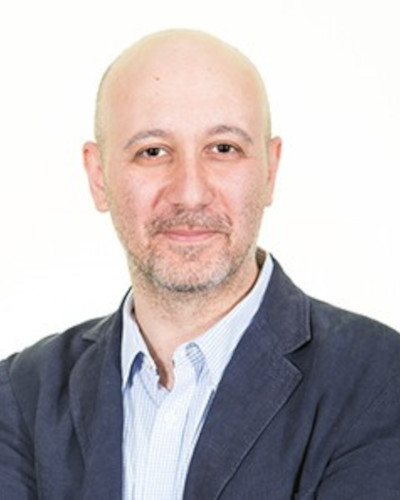 Francesco Colace
Francesco Colace
University Of Salerno, Italy
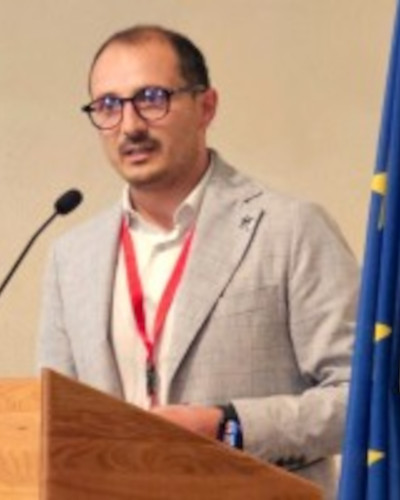 Angelo Lorusso
Angelo Lorusso
Pegaso Telematic University, Italy
 Michele Pellegrino
Michele Pellegrino
University of Salerno, Italy
 Domenico Santaniello
Domenico Santaniello
University of Salerno, Italy
SPECIAL SESSION DESCRIPTION
The special session proposes a methodologically grounded discussion of the use of immersive environments and XR systems (AR/VR/MR) in the research, management, and communication of Cultural Heritage. In recent years, the focus has shifted from the simple "visualisation" of digital content to the design of complex spatial experiences, where data (3D surveys, archival sources, diagnostic analyses, interpretations) is queryable in real time and delivered through guided, multi-level, and often participatory interactions. In this perspective, XR and virtual environments do not represent a channel for dissemination but a true operational environment where scientific curation, experience design, digital preservation, and audience impact assessment intertwine.
A central theme of the session concerns the transition toward persistent, connected virtual ecosystems (multi-user platforms, shared virtual worlds, and "metaverse-like environments") that can extend the experience beyond the in-person visit. These spaces enable practices of remote access, training, co-creation, and collaboration, with significant implications for museums and lesser-known sites, for which the digital dimension can serve as a lever for visibility and for the continuity of relationships with communities.
The session also aims to discuss the scientific premises of reconstructions and immersive narratives. In the cultural field, communicative effectiveness cannot disregard the transparency of hypotheses, the traceability of sources, and the declaration of margins of uncertainty: decisive elements to avoid misleading simplifications and to maintain the distinction between evidence, interpretation, and reconstruction. In parallel, strategies of digital storytelling, serious games, and gamification will be addressed as tools for active learning, inclusion, and accessibility, and their limits, biases, and conditions of applicability will be evaluated in relation to differentiated audiences (age, skills, disabilities, socio-cultural contexts).
Particular attention will be given to the workflows that connect data production and its experiential implementation: acquisition (photogrammetry, laser scanning, LiDAR, advanced imaging), modelling and optimisation, metadata creation, publication on interoperable platforms, preservation and updating. Alongside case studies, the session welcomes contributions focused on impact measurement (user studies, analytics, engagement and learning metrics), user-centred design (UX/UI, interaction design, multimodality), and the construction of cultural digital twins as tools for monitoring, maintenance, and planning.
TOPICS
Key topics include, but are not limited to:
- Theoretical models and methodological frameworks for XR and immersive environments applied to cultural heritage;
- AR/VR/MR in museums, archaeological parks, and monumental sites: design, implementation, maintenance;
- 3D acquisition and workflow (photogrammetry, TLS, LiDAR, advanced imaging) and data integration);
- Real-time modelling, optimisation, and publishing (LOD, streaming, compression, rendering) for XR devices;
- Digital twins for cultural heritage: monitoring, management, preventive conservation, and intervention scenarios;
- Immersive storytelling and spatial narratives: content design, interpretative strategies, semantic coherence;
- Gamification and serious games for heritage education: cognitive objectives, balancing rigour/engagement;
- UX/UI and interaction design in XR: multimodality, haptics, audio-spatial, gesture/voice, accessibility;
- Impact assessment: user studies, learning metrics, engagement analytics, comparative methodologies;
- XR and territorial participation: empowerment of communities, citizen heritage, enhancement of "minor" contexts;
- Integration with AI: support for indexing, personalisation, intelligent guidance, and controlled content generation.
ABOUT THE ORGANIZERS
Francesco Colace is a Full Professor of Computer Science (INF-01) at the Department of Industrial Engineering, University of Salerno. He teaches several courses, including “Networks and Protocols for the Internet of Things” in the Master’s Degree Program in Electronic Engineering. Actively engaged in research involving the application of ICT to the field of Cultural Heritage, he has been the Director of the ICT Center for Cultural Heritage at the University of Salerno since 2021. He also coordinates the research group KnowMan (knowman.unisa.it) and, since 2021, has been appointed by the Ministry of Culture as a member of the Scientific Committee of the Pompeii Archaeological Park.
Angelo Lorusso received the Ph.D. degree in Industrial Engineering from the University of Salerno. He is currently an RTT at the Department of Engineering, Pegaso Telematic University (Naples, Italy). He has authored more than 60 publications in computer science, including papers in international journals. His research interests include the Internet of Things (IoT), BIM, HBIM, and digital twins. He is a member of the Knowman Research Group (knowman.unisa.it) and collaborates with the group on several research projects.
Michele Pellegrino holds a PhD in Methods and Methodologies of Archaeological and Historical-Artistic Research from the University of Salerno. He is currently a research fellow at the Department of Industrial Engineering at the University of Salerno. His work focuses on the dynamics of landscape transformation in central-northern Apulia and Irpinia between Prehistory and Protohistory, combining material culture studies, spatial data management, and digital archaeology (photogrammetry, laser scanning, 3D modelling, 3D GIS, XR/Metaverse). He has extensive experience in archaeological survey and stratigraphic excavation in Apulia and Basilicata and, since 2022, has been a member of the Italian Archaeological Mission at Mersin-Yumuktepe (Turkije)
Domenico Santaniello PhD, is a Researcher at the Department of Cultural Heritage Sciences, University of Salerno. His work bridges cultural heritage and computer science, with expertise in data mining, knowledge management, context-aware and situation-awareness systems, machine learning, and education. He has authored around ten scientific contributions, including papers published in international journals, and he is a member of the Knowman research group.