SPECIAL SESSION #03
Digital archaeological heritage for the education of new generations
ORGANIZED BY
 Roksana Chowaniec
Roksana Chowaniec
Institute of Archaeology, National institute for the Republic of Serbia, Belgrade
 Jelena Anđelković Grašar
Jelena Anđelković Grašar
Institute of Archaeology, National institute for the Republic of Serbia, Belgrade
 Ljubomir Jevtović
Ljubomir Jevtović
Institute of Archaeology, National institute for the Republic of Serbia, Belgrade
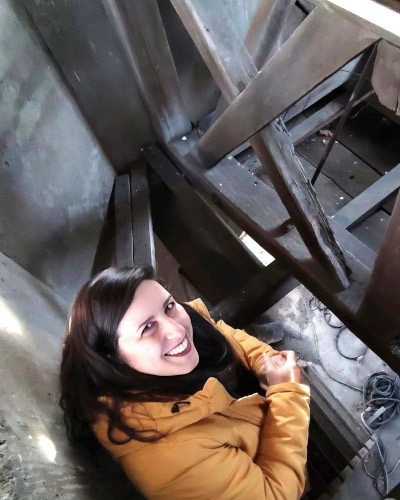 Emilija Nikolić
Emilija Nikolić
Institute of Archaeology, National institute for the Republic of Serbia, Belgrade
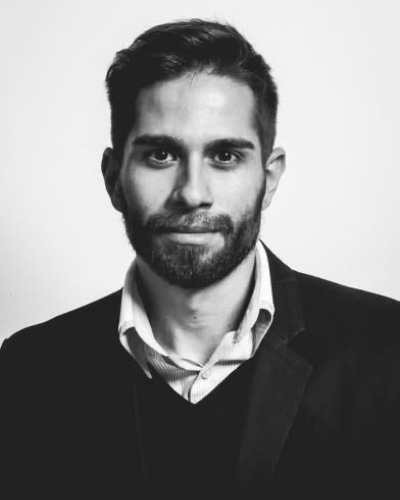 Stefan Stančić
Stefan Stančić
Institute of Archaeology, National institute for the Republic of Serbia, Belgrade
SPECIAL SESSION DESCRIPTION
This special session explores the design, creation, and pedagogical use of digital archaeological heritage – including museum collections, archaeological sites, archives, and documentation – to support the education of new generations, with particular focus on early childhood and primary education contexts. It addresses how digital tools can transform archaeological knowledge into meaningful, accessible, and engaging learning experience for young learners.
The session’s scope encompasses a wide range of digital methods and technologies for representing, interpreting, and communicating archaeological heritage. These include, but are not limited to, 3D visualisation and modelling, virtual and augmented reality environments, interactive digital applications, serious games, digital storytelling, and curated digital collections. Contributions may focus on both the technological development of such digital tools and their implementation within formal and informal educational settings.
We invited papers that critically engage with pedagogical frameworks and learning theories underpinning the use of digital heritage in early education, including constructivist, inquiry-based, experiential, and play-based learning approaches. Particular attention will be given to curriculum integration, teacher mediation, and learner-centred and participatory design. Submissions may address classroom practices, museum-school partnerships, co-design methodologies involving educators and children, and the role of narrative, emotion, and embodiment in heritage learning.
The motivation for the session stems from the need to make archaeological heritage meaningful and accessible to pupils growing up in digitally mediated environments. Digital heritage offers the potential to enhance motivation, experiential learning, and critical thinking, while supporting cross-curricular competencies and cultural awareness. By bringing together research and practice from education, heritage studies, and digital technologies, the session aims to advance knowledge on how digitally enabled heritage resources can effectively contribute to learning outcomes and to the development of informed, culturally engaged pupils.
ABOUT THE ORGANIZERS
Roksana Chowaniec is dr habil. in archaeology. Her research includes: Roman Sicily and its role in Roman Empire (on field of strategic of the island, the role of the Greek colonies in new Roman reality, agricultural and owners of the land), but also cognitive problems of the education in archaeological heritage, strategies of education as well as methods of teaching the wide public about culture heritage. Among them most important are research on pedagogical teaching strategies linked with archaeological heritage. She has organised archaeological festivals, exhibitions, workshops, and many activities to teach and promote archaeological heritage. She is a member of i.a. Association for Environmental Archaeology, European Association of Archaeologists, Society Archaeology and Gender in Europe. She has published many papers and books and leaded several international projects, including Forms of archaeological heritage education and promotion in Poland; Archaeology of Urban Life in the Ancient Akrai/Acrae, Sicily; INNOVARCH Public Archaeology in European Higher Education curricula; TRAME - Tracce di memoria, etc.
Dr. Jelena Anđelković Grašar is a senior research associate and historian of arts. Her main research fields are cultural heritage communication, dissemination, audience engagement, education and sustainable development and studies of visual culture of the Late Antiquity. Currently at the Institute she holds a position of Head of Cultural Heritage Department, but also is part of the Viminacium project team which established and developed Viminacium Archaeological Park to grow in the direction of becoming a tourist destination and educational center. Additionally, she is a member of the team that established and developed the unique scientific product – exhibition Itinerarium Romanum Serbiae and Viminacium, which was visited by more than a million visitors throughout the world. She authored numerous scientific papers and several monographs. She is a member of the Serbian Archaeological Society, EXARC, the National Committee of the XVIII Congress of Christian Archaeology (CIAC), and the National Committee of the 18th International Colloquium on Roman Provincial Art. Finally, she has extensive EU project management experience, taking part in numerous projects, most notably: GREENHERITAGE – Nurturing a sustainable future in the gardens of time (ID No 101174141, 2024-2027), Dancing Histor(y)ies – binding communities and heritage through dance (ID No 101099222, 2023-2026), Interpreting Art of Mysterious Medieval Stećak Tombstones through Virtual Reality (StećakLand) (No. 101129632, 2023-2025), SHELeadersVR- Life and environment of Women Leaders in Western Balkans History in Virtual Reality (No 101055818, 2022-2025), TRAME – Traces of Memory (2020-1-IT02-KA201-079794, 2020-2022) and COOLTOUR – Millennials for Cultural Heritage (2021-1-IT03-KA220-YOU-000029203, 2022-2024).
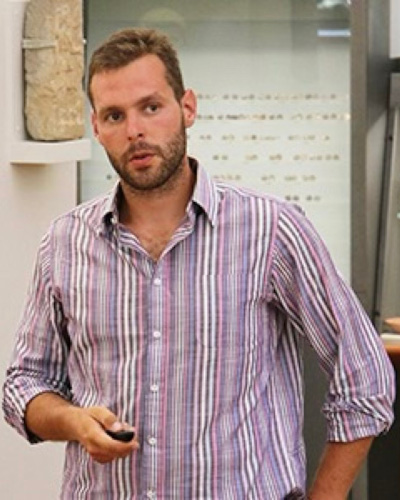
Dr. Ljubomir Jevtović is a research associate of the Institute of Archaeology (Serbia), specialising in Roman military history, epigraphy and economy. He is actively involved in research at the archaeological site of Viminacium, and his interests recently also include photography, graphic design, and social media. Ljubomir took part in several scientific conferences and congresses and published numerous papers. He is actively participating in several EU projects. Most recently, he participated in the projects: TRAME – Traces of Memory (2020-1-IT02-KA201-079794, 2020-2022), IMMERSIUM - Immersive Storytelling Driven Cooperation for Cultural Heritage Dissemination in Western Balkans (Project ID: 400623277, 2021-2023), COOLTOUR – Millennials for Cultural Heritage (2021-1-IT03-KA220-YOU-000029203, 2022-2024) and Dancing Histor(y)ies – binding communities and heritage through dance (ID No 101099222, 2023-2026).
Dr. Emilija Nikolić is a senior research associate at the Institute of Archaeology in Belgrade and a member of the research team at the Roman archaeological site of Viminacium, Serbia. Trained as an architect, she designed facilities for the Viminacium Archaeological Park, an open-air museum spanning the Neolithic period, the presentation of an Eneolithic mine, and the reconstruction of a medieval fortress. She has authored and co-authored academic papers, lectured at conferences, participated in and tutored workshops, and contributed to international projects. She led a multidisciplinary project on Roman mortars in Serbia aimed at developing conservation recommendations, which received a national award as the best-funded project in the humanities and social sciences. Her research interests include historic constructions and building materials, lime mortars, geometry, and cultural landscapes.
Stefan Stančić is a research assistant at the Institute of Archaeology in Belgrade. His work focuses on the research, interpretation, and presentation of cultural heritage through contemporary multimodal approaches, with a particular emphasis on 3D photogrammetry of archaeological artefacts. He holds an MA in Applied Arts from the University of Belgrade and is currently a PhD candidate at the Faculty of Dramatic Arts, University of Belgrade, in the field of art, media, and cultural theory. He has participated in several European projects, including Creative Europe, Erasmus+, and Interreg. In earlier stages of his career, he was engaged in monumental art, primarily in the creation of mosaic compositions.