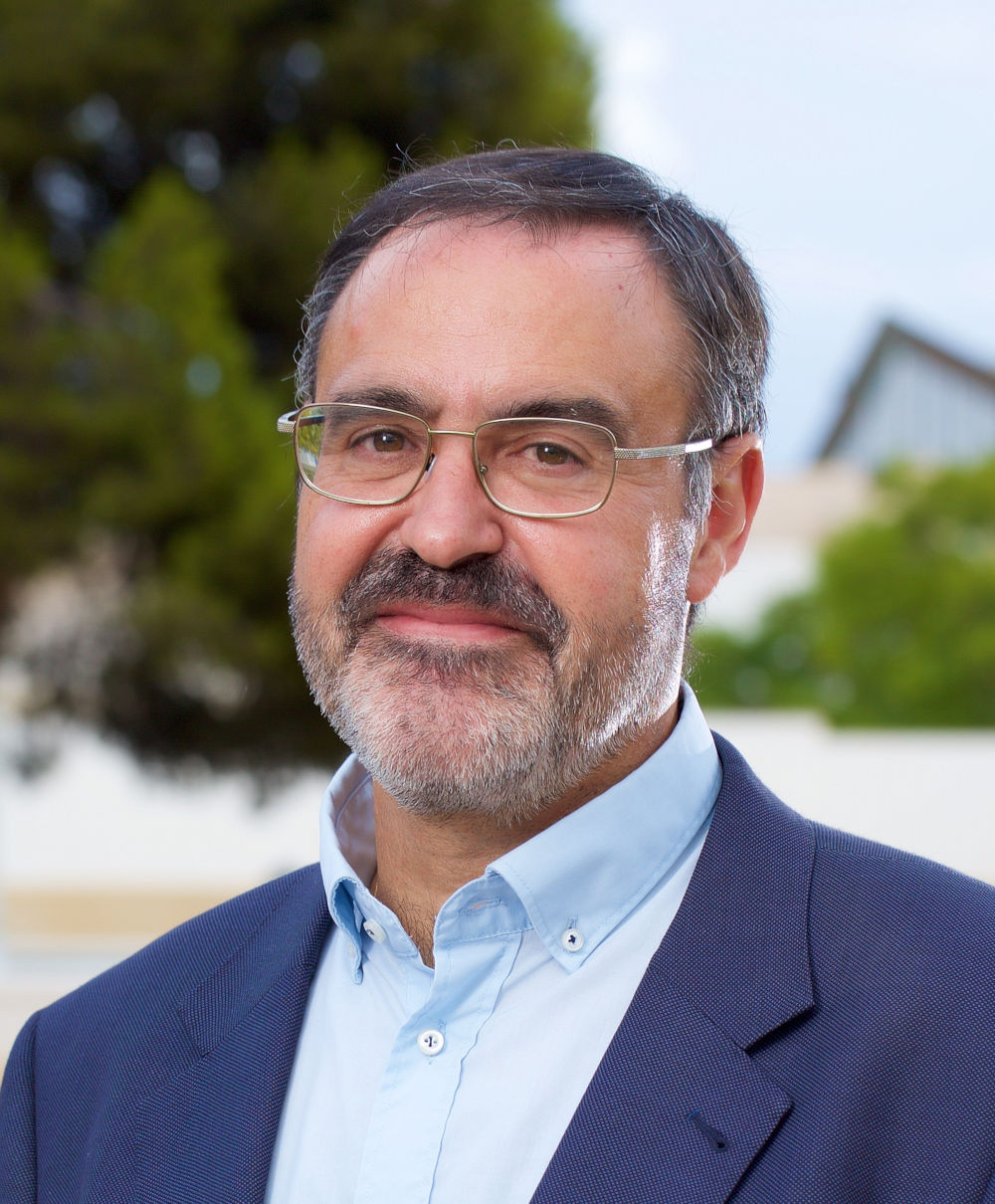
 Salvador Ivorra
KEYNOTE LECTURE
From temperature fields to residual structural capacity: a metrology-driven approach to the assessment and strengthening of heritage masonry
Salvador Ivorra
Universidad de Alicante, Spain
ABSTRACT
Historic masonry represents a substantial part of the architectural and cultural heritage of many regions, yet its structural assessment remains particularly challenging because of material heterogeneity, limited tensile capacity, previous damage and the uncertainty associated with extreme actions such as earthquakes and fire. In this context, strengthening interventions should not be evaluated only in terms of nominal material strength, but through measurable evidence linking damage, interfaces and residual structural capacity. This presentation proposes a metrology-driven approach to the assessment and strengthening of heritage masonry, drawing on a sequence of experimental studies developed from material characterization to full-scale structural testing. Particular attention is devoted to Textile Reinforced Mortars (TRM), whose performance has been investigated under in-plane cyclic loading and after high-temperature and real-fire exposure. The integration of load and displacement measurements, thermal monitoring, Digital Image Correlation and post-damage inspection makes it possible to quantify crack development, stiffness degradation, ductility, energy dissipation and residual strength, while distinguishing the response of the reinforcement from that of the masonry substrate and their interface. The presentation will discuss how fire exposure can significantly alter the structural response of masonry and how TRM may improve post-fire performance, while also showing that severe substrate damage can limit the effectiveness of otherwise undamaged reinforcement. This evidence highlights the need to move from material-based qualification toward system-level assessment. The same experimental philosophy is then extended to emerging strengthening solutions, including Ultra-High-Performance Concrete (UHPC), natural-fibre TRM systems and ongoing applications to rammed-earth structures. Ultimately, the contribution positions metrology as the link between diagnosis and intervention: reliable strengthening of heritage structures requires measurements capable of identifying damage mechanisms, quantifying residual capacity and validating compatible, efficient and resilient conservation strategies.
SPEAKER BIOGRAPHY
Salvador Ivorra is Full Professor of Structural Engineering at the University of Alicante, where he leads the Structural Testing, Simulation and Modelling Research Group (GRESMES) and currently serves as Vice-Rector for Infrastructure, Sustainability and Occupational Safety. His research focuses on the experimental and numerical assessment of structures, structural dynamics, monitoring, strengthening techniques and the conservation of historic constructions, with particular attention to masonry structures and their response to extreme actions. He received his PhD in Industrial Engineering from the Universitat Politècnica de València in 2002, with a doctoral thesis on the dynamic actions induced by swinging bells on masonry bell towers. Since then, a significant part of his work has addressed the structural behaviour of architectural heritage through experimental testing, vibration-based assessment, structural monitoring and numerical modelling. In recent years, his research has focused on innovative strengthening systems for masonry, including Textile Reinforced Mortars (TRM), full-scale cyclic testing, Digital Image Correlation and the residual structural performance of strengthened walls after high-temperature and real-fire exposure. This research has expanded to Ultra-High-Performance Concrete (UHPC), natural-fibre TRM systems and the strengthening of earthen and rammed-earth heritage structures. Ivorra has authored more than 85 scientific journal papers, supervised 20 doctoral theses and participated in numerous competitive research projects and technology-transfer contracts. His work combines metrology, experimental mechanics and structural engineering to support evidence-based and resilient conservation strategies for existing and historic structures.